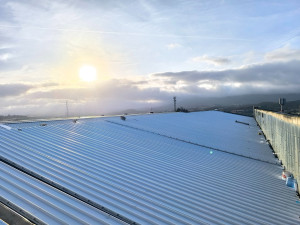
A roof leak does not always appear directly below the damaged area. Water can enter through a crack, a defective flashing or junction, a waterproofing seam, or an area near a drain, then travel beneath the roof covering and appear on a ceiling or wall several metres away from the actual source of the problem.
In Spain, the condition of the roof is particularly important due to the combination of intense sunlight, high summer temperatures, periods of heavy rainfall, and sudden changes in weather. In coastal areas, humidity, wind, and salty air are additional factors. On flat roofs and terraces — cubiertas planas and azoteas — damaged waterproofing, defective junctions, and inadequate rainwater drainage are common causes of leaks.
Simply sealing the visible wet area is usually not enough. It is important first to determine where the water is actually entering and to inspect the condition of the roof covering, waterproofing, junctions, drainage system, and other potentially vulnerable areas.
If the roof is part of the common elements of an apartment building, the responsibility of the comunidad de propietarios and the procedure for approving the work should also be established before repairs begin.
Our service can help you find a verified roofing and waterproofing specialist near you who can identify the source of the leak and select an appropriate repair method based on the roof construction and the conditions in which the property is used in Spain.
Diagnosis and Leak Source Detection
A wet patch on the ceiling shows where water has appeared inside the property, but not necessarily where it entered through the roof. Finding the source can be particularly difficult on flat roofs, terraces, and structures with concealed waterproofing.
The specialist inspects the roof surface, junctions with walls and parapets, pipe and ventilation penetrations, drainage elements, seams, cracks, and the condition of the waterproofing system.
If a visual inspection is not sufficient, additional diagnostic methods and local tests may be used depending on the roof construction. The aim is to identify the cause of the leak before starting repairs rather than simply sealing the nearest visible crack.
What should be discussed in advance:
exactly where moisture appears inside the building;
whether the leak occurs during any rainfall or only during heavy rain;
how long the problem has existed;
whether the roof has been repaired before;
the type of roofing and waterproofing;
access to the roof;
whether there is a terrace or accessible roof;
the condition of the drainage system;
whether additional diagnostics are required;
which areas will be inspected.
Flat Roof or Terrace Waterproofing Repair
Flat roofs, azoteas, and terraces are very common in Spain. Their protection against water depends not only on the surface finish but, above all, on a correctly installed waterproofing system and properly executed junctions.
Over time, waterproofing can crack, detach, lose its elasticity, or become damaged around seams and service penetrations. Problems can also appear after the installation of air-conditioning units, solar panels, antennas, or other equipment.
Before repairing the roof, it is important to determine the extent of the damage. A small local defect can sometimes be repaired without replacing the entire waterproofing system. However, if the covering is badly deteriorated or damage appears in several areas, local patches may provide only a temporary solution.
What to pay attention to:
the type of existing waterproofing;
the age of the covering;
the condition of the substrate;
cracks and blistering;
junctions with parapets;
pipe penetrations;
seams;
roof slopes;
areas of standing water;
compatibility of the repair material with the existing system.
Pitched Tile Roof Leak Repair
On pitched roofs, leaks may be caused by displaced, cracked, or damaged roof tiles, defects in the underlying waterproofing layer, or damage to ridges, valleys, and junctions.
After strong winds, individual roof elements can move even when the roof appears normal from ground level. For this reason, if a leak keeps returning, it is advisable to inspect not only the visibly affected area but also the surrounding sections.
During repairs, damaged elements are restored or replaced while the condition of the layers underneath is also checked. If water has been entering the roof structure for a long time, the insulation, battens, and timber components may also need to be assessed.
What should be checked:
the condition of tiles or other roof covering;
the ridge;
roof valleys;
junctions and flashings;
the underlying waterproofing;
fixing of roofing elements;
signs of wind damage;
the condition of timber components;
ventilation beneath the roof covering;
signs of prolonged moisture exposure.
Repair of Junctions, Gutters, Drains, and Service Penetrations
Roof leaks very often occur not in the middle of the roof covering but around more complex details: chimneys, ventilation outlets, pipes, parapets, walls, antennas, equipment fixings, or drainage elements.
Different materials meet in these areas and react differently to heating, cooling, and structural movement. Over time, sealants can lose their elasticity and junctions can stop providing reliable protection against water.
The drainage system also requires particular attention. A blocked or poorly functioning drain can cause water to accumulate on a flat roof and significantly increase the stress on the waterproofing.
What is important to check:
junctions with walls and parapets;
chimneys;
ventilation outlets;
pipe penetrations;
equipment fixings;
roof drains;
gutters;
downpipes;
emergency overflows, where provided;
sealing around all penetrations through the roofing system.
Local Repair of Cracks, Seams, and Damaged Areas
If the waterproofing is generally in good condition and the problem is limited to a small area, a local repair may be sufficient.
The damaged area is cleaned and prepared, loose or detached material is removed, and watertightness is restored using a method suitable for the existing system.
The repair material must be compatible with both the substrate and the existing waterproofing. Simply applying a random sealant over a damp or poorly prepared surface often provides only a short-term result.
What should be agreed in advance:
the size of the damaged area;
the cause of the defect;
the condition of the surrounding material;
how the surface will be prepared;
the repair system that will be used;
compatibility of the materials;
whether reinforcement of the repair layer is required;
treatment of seams;
drying or curing times;
warranty conditions for the repair.
Comprehensive Repair of a Leaking Roof
If leaks occur in several areas, the roof has been in service for many years, or previous local repairs have failed to solve the problem, more extensive restoration may be required.
The work may include removing damaged layers, repairing the substrate, restoring the required slopes, replacing or installing new waterproofing, repairing junctions and drainage elements, and subsequently restoring the final surface finish.
On an accessible terrace, tiles or another surface covering may sometimes need to be removed to gain access to the waterproofing. Before work begins, it is therefore important to determine not only the cause of the leak but also the full extent of the restoration required after the waterproofing repair.
For properties belonging to comunidades de propietarios, it should be established in advance whether the roof or terrace forms part of the building's common elements, who must approve the work, and how access will be arranged. If substantial changes to the structure or roofing system are planned, the need for technical documentation and permits should also be checked.
What should be clear before work begins:
the cause of the leak;
the condition of the existing roofing system;
the area to be repaired;
whether demolition or removal is required;
which layers will be replaced;
the type of new waterproofing;
whether the roof slopes need to be corrected;
drainage repairs;
restoration of tiles or other finishes;
access to the roof;
protection of interior areas during the work;
construction waste removal;
completion times;
warranty conditions;
the final quotation.
How to Choose a Roof Leak Detection and Repair Specialist
Repairing a leak starts not with sealant but with a proper diagnosis. A good specialist should be able to explain why the water is entering, how it is travelling through the structure, and exactly what needs to be repaired.
Experience with your specific type of roof. A waterproofed flat roof, an accessible terrace, and a pitched tile roof require different approaches. It is useful to see examples of similar projects and find out which roofing systems the contractor regularly works with.
Diagnosis before repair. Be cautious if a repair method is proposed solely on the basis of a photograph of a wet ceiling. In many cases, the roof itself must first be inspected and the possible routes of water ingress checked.
Understanding of waterproofing systems. The specialist should identify the existing material and select a compatible repair method. Applying a new product over an old covering without checking compatibility can result in detachment and recurring leaks.
Checking rainwater drainage. This is particularly important for flat roofs in Spain. Slopes, roof drains, drainage channels, and areas where water remains after rainfall should all be checked. Sometimes the problem is caused not only by damaged waterproofing but also by inadequate drainage.
Attention to junctions and penetrations. Parapets, walls, chimneys, ventilation outlets, pipes, and equipment fixings are among the most vulnerable parts of a roof. A thorough diagnosis will normally include an inspection of these areas.
Understanding the local climate. Roofing materials in Spain are exposed to intense solar heating and high summer temperatures. In some regions, heavy rainfall, wind, humidity, and the marine environment are additional factors. The repair solution should be appropriate for the conditions at the specific property.
Safe working at height. Access to the roof and the organisation of the work should be safe. This is particularly important on pitched roofs, tall buildings, and areas close to roof edges.
Experience working with comunidades de propietarios. For apartment buildings, it is useful if the specialist has experience with projects where access, use of common areas, and coordination with the comunidad de propietarios need to be arranged.
A clear quotation. The quotation should ideally show the cost of diagnosis, preparation, any necessary removal work, materials, waterproofing repair, restoration of the roof finish, work on junctions and drainage systems, and waste removal.
Warranty and clearly defined scope of work. It is important to record in advance exactly which area will be repaired, which system will be used, and what the warranty covers. If the source of the leak has not been conclusively identified, this should also be made clear before the work begins.
Frequently Asked Questions (FAQ)
▸ How can I tell where the roof is actually leaking?
The place where water appears on a ceiling or wall is not always directly below the damaged part of the roof. Water can enter beneath the waterproofing near a parapet, pipe, ventilation outlet, or another junction, travel between the layers of the structure, and only appear inside the property several metres away from the original defect.
For this reason, the process usually starts not by repairing the wet area but by inspecting the entire potentially problematic section. Particular attention is paid to seams, junctions, cracks, roof drains, service penetrations, and areas of standing water. Before repairs begin, it is important to understand how confidently the source of the leak has been identified and whether the repair will address the actual cause rather than just the visible consequence.
▸ Why does the roof leak only during heavy rain?
This is quite common. A small defect may cause virtually no problem during light rainfall, but when there is a large volume of water or strong wind, moisture may begin to enter through a damaged junction, seam, or section of waterproofing.
On a flat roof, slow drainage can also be responsible. During a heavy downpour, the water level around a roof drain can rise and reach an area that normally remains dry during lighter rainfall. It is useful to note whether the leak starts immediately when it begins raining or only after some time, and whether it appears to depend on the direction of the wind.
▸ Why is the wet patch far away from the damaged part of the roof?
Water inside a roof structure rarely travels straight down. It can spread across the surface of the slab, beneath the waterproofing, or along beams, joints, and other structural elements until it finds a point where it can enter the interior.
This is why repairing only the section directly above the visible stain sometimes fails to solve the problem. If the source is not obvious, it is better to inspect a wider area of the roof and trace the possible path of the water.
▸ Can I simply seal a crack with sealant?
If a small local crack has been found and it is clear that water is entering through that specific point, an appropriate sealing material may indeed form part of the repair.
In practice, however, a visible crack is often only one sign of a larger problem, such as detached waterproofing, a defective junction, movement of the substrate, or persistent water accumulation. Before applying sealant, the condition of the material around the damaged area and the compatibility of the new product with the existing roofing system should therefore be assessed.
▸ Can a roof be repaired without completely replacing the waterproofing?
In many cases, yes. If the main waterproofing system is in satisfactory condition and the damage is limited to one area, a local repair may be a perfectly reasonable solution.
The situation is different with an old roof that has numerous cracks, blisters, detached areas, and signs of several previous repairs. Another patch may solve the problem only temporarily. Before deciding, it is worth comparing the overall condition of the surface, the expected lifespan of a local repair, and the cost of more comprehensive restoration.
▸ Why does a flat roof or azotea start leaking after heavy rain?
Correct slopes and properly functioning drains are particularly important on flat roofs. If water drains quickly after rainfall, the waterproofing is subjected to less prolonged exposure. If a large pool forms near a parapet, roof drain, or in the middle of the roof, weak areas remain exposed to water for longer.
For this reason, diagnosis should not focus only on cracks. The geometry of the roof surface, the condition of the drains, and areas where water regularly accumulates should also be checked. Sometimes repairing the leak without addressing the drainage problem results in the leak returning.
▸ Is standing water on a flat roof dangerous?
Small amounts of water remaining immediately after rainfall do not necessarily indicate a serious defect. The situation is more concerning when large pools remain for a long time or repeatedly appear in the same location.
In this case, the slopes and drainage system should be checked. Continuous exposure to water is particularly undesirable where there are already old seams, cracks, damaged areas, or vulnerable junctions. Before repairs begin, it is worth determining whether restoring the waterproofing alone will be sufficient or whether drainage also needs to be corrected.
▸ Can new waterproofing be applied over the existing waterproofing?
This approach is sometimes used, but it is not suitable for every roof. Much depends on the type of existing waterproofing, how well it adheres to the substrate, moisture within the structure, and the compatibility of the materials.
If the existing layer is detaching, has numerous blisters, or contains trapped moisture beneath it, applying a new material on top may simply conceal the defect. The existing covering should therefore be assessed before work begins to determine which areas can remain and which should be removed or prepared separately.
▸ Do the tiles need to be removed from a leaking terrace?
Not always. Sometimes the source is a junction, drain, or another accessible detail that can be repaired without removing the entire surface.
However, if the waterproofing directly beneath the tiles is damaged, gaining access to it may require partial or more extensive removal. In this situation, it is important to establish in advance not only how much of the surface will be opened but also who will restore the tiles, joints, skirting, and other finishes once the waterproofing work is complete.
▸ Why does a terrace leak even though the tiles look completely intact?
Because ceramic tiles and their joints are generally not the primary waterproofing system. Some moisture may pass through the surface finish, while the waterproofing layer underneath should prevent it from entering the building.
Therefore, the absence of visible cracks in the tiles does not mean that the waterproofing is intact. If leaks keep returning, the junctions with walls and parapets, drainage elements, and the condition of the concealed waterproofing layer should also be checked.
▸ Can a roof start leaking after solar panels, an air-conditioning unit, or an antenna are installed?
Yes, particularly if the installation required fixings or penetrations through the roofing layers. The problem may appear immediately, or it may only become noticeable after heavy rain or some time later.
If the leak started after equipment was installed, that area should be one of the first places inspected. It is important to check not only the fixing itself but also the sealing around it, the condition of the waterproofing, and whether the installation has altered the direction in which water drains.
▸ What should I do if the leak appeared after strong winds?
On a pitched roof, strong winds can displace or damage individual tiles, ridge elements, flashings, and other roofing components. On flat roofs, the waterproofing, equipment fixings, and areas near parapets should also be inspected.
Climbing onto a wet or damaged roof yourself can be dangerous. If an inspection at height is required, it is worth establishing in advance how the specialist will gain safe access and whether additional equipment will be needed.
▸ Can a leaking roof be repaired while it is raining?
A full waterproofing repair is usually carried out in suitable weather conditions. Many materials require a dry or specially prepared substrate, a certain temperature range, and a period without rainfall after application.
If there is an active leak, temporary measures may sometimes be taken first to reduce the amount of water entering the building. The main repair can then be scheduled for suitable weather. In this situation, it is important to understand whether the work being carried out is a temporary measure or the final repair.
▸ When is the best time to repair a roof in Spain?
For planned repairs, it is best to choose a period when the weather forecast allows the surface to be properly prepared and the materials to have enough time to dry or cure. However, the absence of rain is not the only consideration.
During summer in Spain, roof surfaces exposed to direct sunlight can become extremely hot, which can also affect some waterproofing materials and their application. The timing of the work should therefore take into account rainfall, temperature, direct sunlight, and the recommendations of the manufacturer of the waterproofing system.
▸ Why has the roof started leaking again after it was repaired?
One common reason is that the original source of the water was incorrectly identified. There may also be several damaged areas while only the most obvious one was repaired. A recurring leak can also result from poor surface preparation, incompatible materials, damage to a neighbouring section, or an unresolved drainage problem.
If water appears again, carrying out a fresh diagnosis of the entire area is usually more useful than simply applying another layer of sealant over the previous repair.
▸ Should the drainage system be checked if the roof is leaking?
Yes, particularly on flat roofs and terraces. A blocked roof drain can cause water to accumulate quickly during heavy rainfall. Even waterproofing that is otherwise in good condition is subjected to much more demanding conditions when this happens.
During repairs, it is worth checking whether water flows freely, whether there is debris or damage, and whether any areas have an incorrect slope. If the problem returns after every heavy downpour, the condition of the drainage system becomes one of the key points of the diagnosis.
▸ Who is responsible for repairing a leaking roof in an apartment building in Spain?
If the roof forms part of the building's common elements, the repair is generally dealt with through the comunidad de propietarios. Terraces can be more complicated: the terrace itself may be for private use while certain structural or waterproofing elements may still form part of the building's common elements.
Before major repairs begin, it is therefore important to establish the status of the damaged area and the procedure for approving the work. This is particularly relevant if a large area needs to be opened, access through common areas is required, or the work affects the building's shared roofing system.
▸ Is a permit required to repair a leaking roof?
A small local repair and a complete reconstruction of a roofing system are very different in scale. Requirements for simply restoring a damaged area will generally differ from those applying when the roof structure, covering, or a substantial part of the roofing system is being changed.
Before major work begins, it is worth establishing whether technical documentation or municipal approval is required. In an apartment building, the need for approval from the comunidad de propietarios should also be checked.
▸ How can I tell whether the roof repair has been carried out properly?
Once the work is complete, it should be clear where the suspected source of the leak was located, exactly what was repaired, and which materials were used. The repaired area, seams, junctions, and neighbouring elements that may have contributed to the problem should be inspected.
If the repaired waterproofing will later be covered with tiles or other layers, photographs of the work before those layers are closed can be useful. For some types of repair, a suitable watertightness test may also be possible; the appropriate method should be agreed according to the construction of the specific roof.
▸ What determines the cost of roof leak detection and repair?
The cost depends on the actual scope of diagnosis and repair rather than the size of the stain on the ceiling. A small visible leak may require an extensive search to find its source, while an obvious local defect may be relatively quick to repair.
The price is affected by the type of roof, the condition of the waterproofing, the size of the repair area, whether tiles or other layers need to be removed, the height of the building, access conditions, and any necessary repairs to the substrate, junctions, or drainage system. Before work begins, it is useful to agree whether the price includes diagnosis, materials, removal work, restoration of the finish, cleaning and waste disposal, and what warranty is provided for the repaired area.
Platform capabilities
Expert
I can provide repair and construction services in Spain
 Request your free quote