Damaged concrete structures can pose a risk to people, buildings, and the surrounding property. Cracks, chips, concrete deterioration, exposed reinforcement, or partial loss of structural strength require timely action. Attempting to demolish a massive structure yourself can lead to uncontrolled collapse, damage to utilities, or damage to adjacent elements.
Demolition of damaged concrete structures is not simply a matter of breaking concrete. It is a комплекс of works that includes assessing the condition of the structure, preparing the work area, choosing the appropriate demolition method, dismantling the concrete, and removing construction waste. It is particularly important to consider the size of the structure, the presence of reinforcement, the proximity of walls, foundations, utility lines, and other elements.
If a concrete structure is seriously damaged or needs to be completely removed, it is better to entrust the work to professionals. Professional demolition allows the process to be controlled, reduces the risk of damaging surrounding structures, and safely prepares the site for further work.
Demolition of small concrete structures
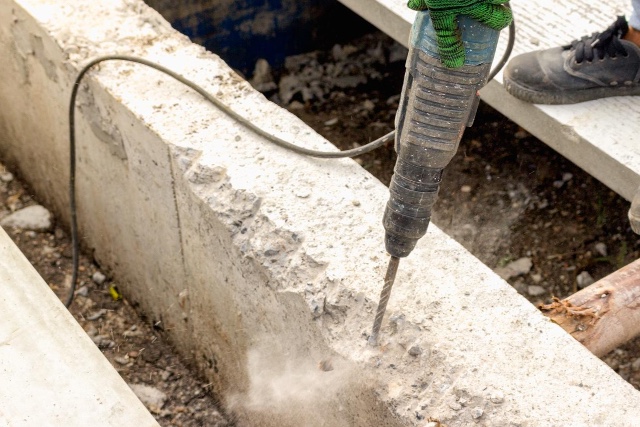
Small concrete elements — steps, concrete edging, curbs, individual slabs, or sections of screed — can usually be demolished without heavy machinery.
The specialist determines the demolition boundaries, protects surrounding surfaces, and removes the concrete step by step using the appropriate tools.
▶︎ As a result, the damaged element is removed without unnecessary damage to adjacent structures.
What is important to discuss in advance:
the dimensions and thickness of the concrete;
the presence of reinforcement;
access to the structure;
whether waste removal is required.
Demolition of reinforced concrete structures
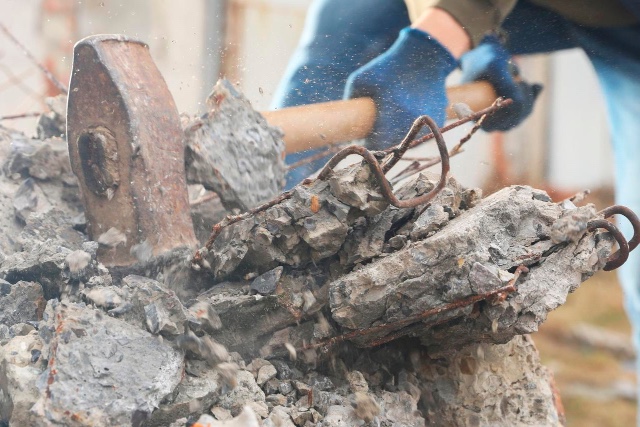
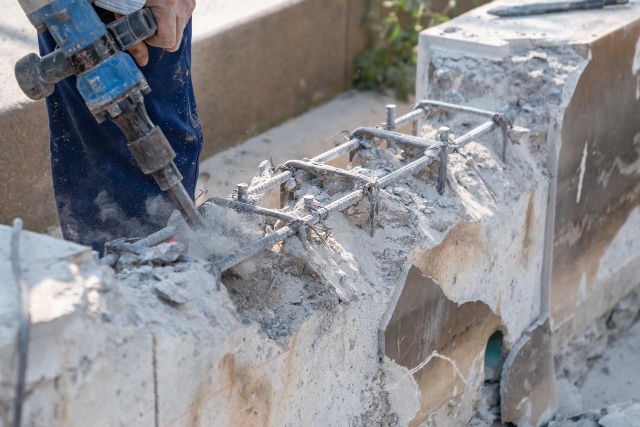
Reinforced concrete requires a more complex approach because metal reinforcement is embedded inside the structure and must be separated from the concrete.
The specialist breaks down the concrete structure in stages, exposes the reinforcement, and, if necessary, cuts the metal elements using specialized tools.
▶︎ The structure is dismantled in a controlled manner, while the reinforcement and concrete can be prepared separately for removal or recycling.
Things to pay attention to:
the diameter and amount of reinforcement;
the thickness of the concrete layer;
the location of the structure;
whether metal cutting is required.
Diamond cutting and concrete demolition
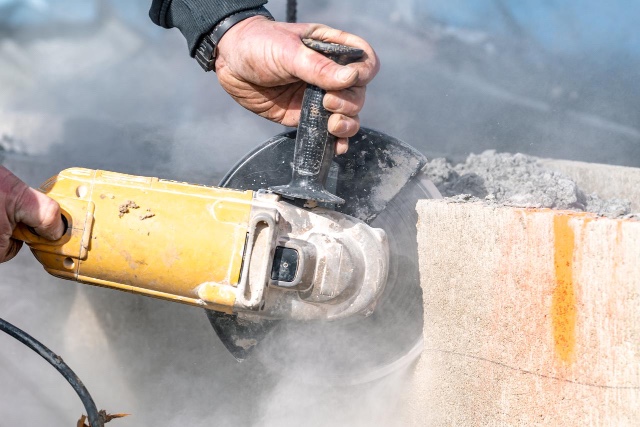
If only a specific part of a structure needs to be removed, diamond cutting can be used instead of completely breaking up the concrete.
The specialist makes precise cuts along predetermined lines, after which individual concrete sections are dismantled and removed.
▶︎ This method provides a clean edge and reduces the impact on adjacent elements.
What to clarify in advance:
the depth and length of the cuts;
the thickness of the structure;
the presence of reinforcement;
whether water can be supplied and drained when wet cutting is used.
Demolition of concrete walls and partitions
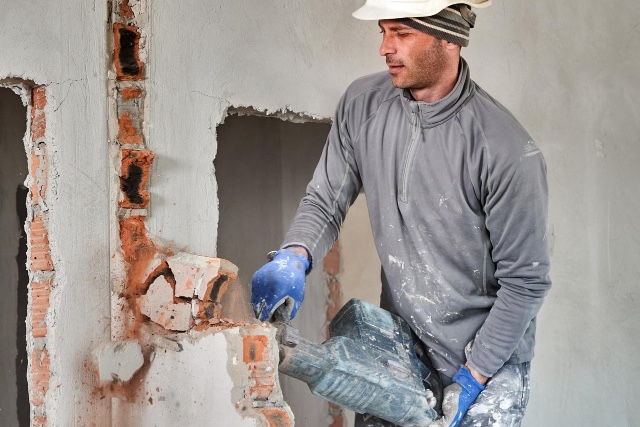
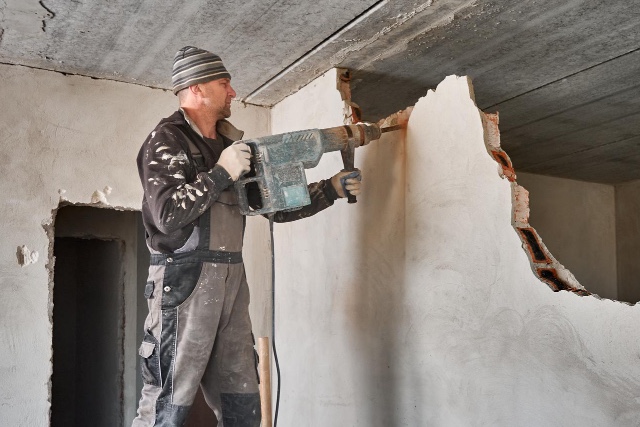
Concrete walls and partitions may be part of the building's structural system or may be independent structures, so it is important to determine their purpose and location before work begins.
The specialist assesses the structure, determines a safe demolition sequence, and removes the concrete in stages, preventing uncontrolled collapse.
▶︎ The work is carried out systematically, with minimal risk to surrounding structures.
Old, damaged, or unnecessary concrete foundations may require partial or complete demolition.
The specialist assesses the structure, determines its depth, selects an appropriate demolition method, and organizes the removal of concrete fragments and reinforcement.
▶︎ Once the foundation is removed, the area can be prepared for a new foundation, an extension, or further landscaping work.
Things to consider:
the depth of the foundation;
the dimensions of the concrete mass;
the presence of reinforcement;
the proximity of the building and utilities;
whether construction equipment can access the site.
Mechanized concrete demolition
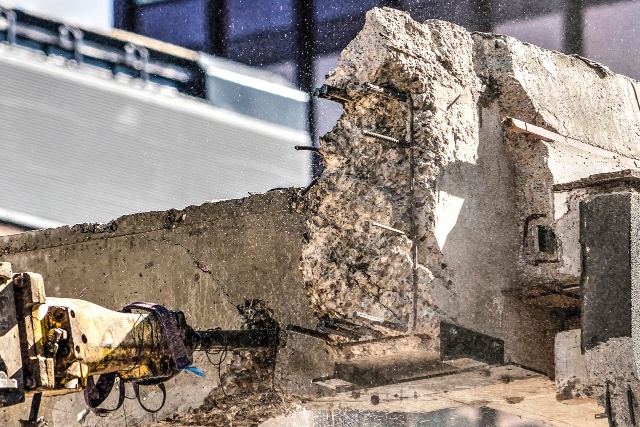
For large and massive structures, construction equipment such as hydraulic breakers, concrete breakers, mini-loaders, and other machinery may be used.
The specialist selects the equipment according to the scope of work, organizes a safe work area, and dismantles the structure in stages.
▶︎ Large volumes of concrete can be removed much faster, while the amount of manual work is minimized.
What to agree on in advance:
whether machinery can access the site;
the size of the work area;
the volume of concrete;
the level of noise and vibration;
whether surrounding structures need additional protection.
Concrete demolition in confined spaces
Construction equipment cannot always reach the work area directly. This is particularly relevant for basements, narrow passages, courtyards, indoor spaces, and already landscaped areas.
In such cases, the specialist uses compact equipment and carries out the demolition in stages, manually removing concrete fragments.
▶︎ The work can be carried out even where the use of large machinery is impossible.
What is important to discuss:
the width of access passages;
whether concrete fragments can be removed from the site;
ventilation;
protection of walls, floors, and other surfaces.
Comprehensive concrete demolition “turnkey” service
If an entire site or room needs to be cleared of old concrete structures, ordering a comprehensive service is often the most convenient option.
The specialist assesses the site, prepares a demolition plan, selects the equipment, carries out the demolition, removes the debris, and organizes site cleanup.
▶︎ All stages are handled in sequence, so the customer does not have to find separate contractors for demolition and waste removal.
What to agree on in advance:
which structures need to be removed;
the demolition method;
the timeframe;
whether machinery is required;
waste removal and disposal;
the final cost.
How to choose a concrete demolition specialist
Concrete demolition is a type of work where experience and the availability of the right tools are not the only important factors. Particular care is needed when dealing with structures that affect the stability of a building, including load-bearing walls, columns, beams, slabs, and foundations. An incorrect work sequence can lead to new cracks, damage to adjacent elements, or uncontrolled collapse.
Here is what to pay attention to:
Experience Specifically in Concrete Demolition. The specialist should understand the difference between demolishing a small screed, a concrete slab, and a massive reinforced concrete structure. For complex projects, practical experience with reinforced concrete, foundations, walls, and slabs is particularly important.
Assessment of the Structure Before Work Begins. Before demolition, it is important to determine the thickness of the concrete, the presence of reinforcement, the condition of the structure, and how it is connected to other building elements. If utilities run through or alongside the structure, their location must also be taken into account before demolition begins.
Checking Whether the Structure Is Load-Bearing. This is one of the most important points. A load-bearing wall, column, beam, or slab cannot be demolished in the same way as an ordinary partition. It is necessary to understand what loads the structure carries and how the stability of the building will be maintained during the work.
Safe Demolition Sequence. In complex projects, concrete is not simply broken apart all at once. The structure may be divided into separate sections, cut beforehand, or temporarily supported. The sequence depends on the specific structure and should be clear before demolition begins.
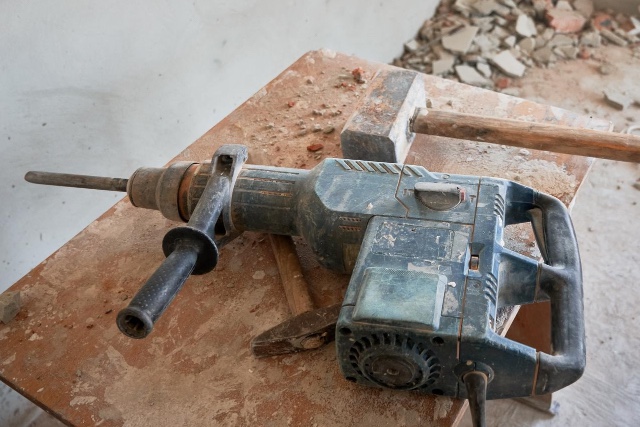
Choosing the Right Equipment. A drill or demolition hammer may be suitable for one structure, while another may require diamond cutting, a hydraulic breaker, or specialized machinery. A good specialist selects equipment not only based on speed but also with consideration for vibration, dust, noise, and the risk of damaging adjacent elements.
Controlling Vibration and Impact on the Building. When demolition takes place near existing walls, foundations, or finishes, excessive vibration can become a problem. In such situations, more controlled methods, such as diamond cutting, may sometimes be preferable.
Organizing the Work Area. Before work begins, windows, doors, utilities, floor coverings, and other elements that could be damaged by falling concrete fragments or construction dust should be protected.
Working in Confined Spaces If demolition takes place in a basement, narrow courtyard, inside a building, or on an already landscaped site, the dimensions of the structure are not the only consideration. It is also important to ensure that equipment can be brought in, concrete can be removed, and safe access can be maintained.
Removal of Concrete Debris. Demolition leaves a significant amount of heavy waste. It is better to determine in advance whether the service includes breaking up large fragments, carrying them out, loading, transportation, and disposal.
Transparent Cost Estimate. A proper estimate should take into account more than just the amount of concrete. The price may depend on reinforcement, structural thickness, access difficulties, the need for machinery, diamond cutting, temporary supports, and waste removal.
Documentation and Responsibility for Complex Work. If the work involves load-bearing elements of a building, it is important to understand who is responsible for the technical aspects and whether the involvement of an appropriate technical specialist or specific documentation is required.
Warranty and Clearly Defined Terms of Work. For major demolition work, it is useful to agree in advance on the scope of work, demolition method, timeframe, cost, and responsibilities of the parties. This is particularly important when work is carried out inside a residential building or close to neighboring properties.
As a result, a good specialist does not simply remove concrete. They assess the structure, risks, and work sequence in advance so that the demolition can be carried out in a controlled manner without unnecessary damage to the building.
Frequently asked questions (FAQ)
▸How can I tell whether a damaged concrete structure can actually be demolished?
Usually, the first step is to assess the condition of the concrete and how it is connected to other building elements. If the structure is part of the load-bearing system, the issue is not simply whether it can be broken down — it is necessary to understand its function and what will happen to the loads after demolition. For load-bearing walls, columns, beams, and slabs, establishing a safe work sequence in advance is particularly important.
▸Can a load-bearing concrete structure be demolished without putting the building at risk?
In some cases, demolition is possible, but it requires a preliminary assessment and proper organization of the work. Temporary supports, staged dismantling, or preliminary cutting of the structure into separate sections may be used. The appropriate method depends on the specific building, the structure itself, and the loads it carries.
▸What happens if you simply break up a load-bearing concrete wall or column?
With uncontrolled demolition, loads may be redistributed unpredictably. This can cause cracks, deformation of adjacent elements, or localized collapse. For this reason, load-bearing structures should not be demolished on a “break it first and see what happens” basis — the sequence and necessary safety measures should be planned in advance.
▸How does the demolition of damaged concrete usually work?
First, the scope of work and condition of the structure are assessed, and the work area is cleared and protected. The appropriate demolition method is then selected, the structure is divided into controlled sections, and the concrete is gradually removed. Finally, the reinforcement and construction debris are cleared, and the base or remaining elements are prepared for the next stage of work.
▸Does a damaged structure always have to be completely demolished?
Not necessarily. If the damage is localized, it may be possible to remove only the deteriorated concrete while preserving the main part of the structure. This can be particularly relevant when the structure can still be used after repair or reinforcement. The decision depends on the nature of the damage and the technical condition of the element.
▸When is diamond cutting used instead of a demolition hammer?
Diamond cutting is generally chosen when a more precise and controlled demolition is required. It is particularly useful when working close to existing walls, slabs, utility lines, or finishes. At the same time, the thickness of the concrete, reinforcement, and working conditions for the equipment need to be taken into account.
▸Can concrete be demolished close to a house foundation?
Yes, but the depth and demolition method need to be carefully controlled. Strong vibration or careless removal of soil near a foundation can create additional risks. The location of the foundation, the depth of the structure, and safe access to the work area should therefore be assessed beforehand.
▸What should be done if the concrete contains a lot of reinforcement?
Significant reinforcement usually makes demolition more labor-intensive. The concrete is removed gradually, while the exposed reinforcement is cut using specialized tools. The diameter, quantity, and arrangement of the metal elements affect both the cost and duration of the work.
▸Can demolition be carried out inside a residential building or apartment?
Yes, but the conditions are very different from working outdoors. Indoors, it is necessary to consider dust, noise, vibration, the removal of heavy fragments, and protection of surrounding surfaces. In a multi-unit residential building, rules concerning the hours when noisy work is permitted and approval of certain building alterations may also apply.
▸How can the amount of dust during demolition be reduced?
Industrial dust extraction, localized wetting, or wet cutting can usually be used if the site conditions allow it. At the same time, electrical safety and proper water drainage need to be considered. The method of dust control is selected together with the demolition method.
This depends on the equipment and the condition of the building. Demolition hammers and hydraulic breakers generally create more vibration, while some cutting methods allow much more precise work. If fragile finishes or older structures are nearby, vibration levels become an important factor when choosing the technology.
▸How is a concrete foundation usually demolished?
Small foundations can sometimes be removed using compact equipment, while massive structures may require a hydraulic breaker or other construction machinery. Before work begins, the depth and dimensions of the foundation, the presence of reinforcement, and the distance from the existing building should be established.
▸What happens to the concrete debris after demolition?
Large fragments are usually collected, broken down further if necessary, and loaded for removal. Reinforcement can be separated from the concrete. For large volumes of waste, a skip or specialized transport is usually arranged in advance.
▸Can part of a concrete structure be preserved?
Yes, if this is technically feasible. The demolition boundary is established in advance, and a more precise method of concrete removal is used. Diamond cutting can help create a clean boundary between the section being preserved and the section being removed.
▸How long does concrete demolition usually take?
A small element may be removed within a few hours, while demolishing a foundation, wall, or large reinforced concrete structure can take several days. The duration depends on the amount of concrete, reinforcement, site access, and whether the structure needs to be dismantled in stages.
▸Can the exact cost of the work be determined in advance?
A preliminary estimate can usually be prepared based on photographs, dimensions, and a description of the structure, but for complex demolition the final cost becomes clearer after an on-site inspection. Reinforcement, restricted access, the load-bearing function of the structure, and the need for temporary supports can have a significant impact on the final estimate.
▸What is normally included in the cost of demolition?
In simple cases, the price may cover only breaking and removing the concrete. With a comprehensive service, it may also include cutting reinforcement, carrying out the fragments, loading, providing a skip, transportation, and cleanup. It is better to define the scope of the service in advance so that different offers can be compared fairly.
▸Who is responsible if adjacent structures are damaged during demolition?
This normally depends on the terms of the agreement and the nature of the work. Before demolition begins, it is useful to document the condition of adjacent walls, floors, façades, or other structures and clearly establish the contractor's responsibility for potential damage.
▸Does the demolition of a load-bearing wall or another part of a building need to be approved?
If the structure affects the load-bearing capacity or layout of the building, technical documentation, design solutions, or approvals may be required in accordance with local regulations. This depends on the property and the nature of the work, so the issue is best resolved before demolition begins rather than after the structure has been removed.
▸Can work begin immediately after the specialist has inspected the site?
For a small non-structural concrete element, often yes. If the work involves a load-bearing structure or a complex reinforced concrete element, an additional technical assessment, calculation, or preparation of temporary supports may be required first.
▸How can I tell whether the specialist has properly organized the demolition?
Usually, a professional approach is evident before work even begins: the specialist inspects the site, asks about the structure, utilities, and adjacent elements, explains the demolition sequence, and discusses potential risks in advance. For complex structures, it is particularly important that safety issues are addressed before demolition starts rather than during the actual breaking of the concrete.
▸Can new construction work begin immediately after demolition?
Usually, all construction debris is first removed, the remaining structures are checked, and the base is prepared. If demolition was carried out in preparation for a new foundation, wall, or slab, additional surface preparation or a technical inspection may be required.
▸What should be agreed before work begins?
First of all, the demolition boundaries, the condition and function of the structure, the selected method, the work sequence, any necessary reinforcement measures, protection of utilities, timeframe, cost, and waste removal arrangements. This approach helps prevent the original agreement from changing after demolition has already started.
Platform capabilities
Expert
I can provide repair and construction services in Spain
 Request your free quote