Concreting walls and structures is used in the construction of private houses, extensions, garages, swimming pools, retaining walls, utility rooms, and other permanent structures. The strength, geometry, and durability of the entire structure depend on the quality of preparation, reinforcement, formwork, and concrete placement.
In Spain, concrete work needs to take the specific conditions of each project into account: the purpose of the structure, expected loads, soil characteristics, site topography, humidity, sun exposure, and the location of the building. For outdoor elements and properties in coastal areas, environmental exposure and the durability of reinforced concrete are also important considerations.
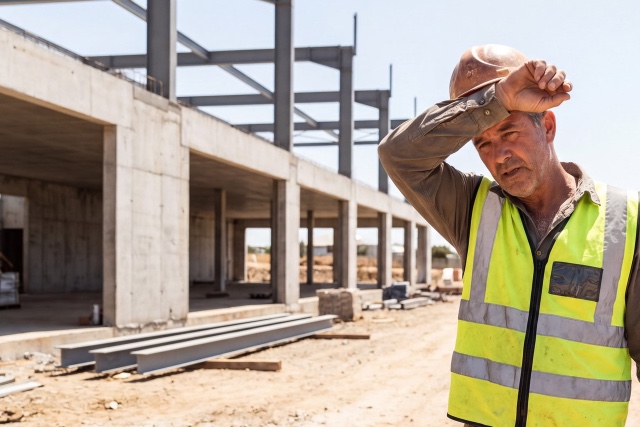
Concreting in hot weather requires particular attention. At high temperatures and under direct sunlight and wind, fresh concrete can lose moisture more quickly, so it is important to properly organise concrete delivery, the pace of placement, and subsequent curing.
If load-bearing walls, columns, beams, floor slabs, foundations, or other elements affecting the stability of the building are being concreted, their dimensions, reinforcement, concrete specifications, and structural connections should comply with the design and applicable requirements.
Our service helps you find a verified concrete and reinforced concrete specialist near you who can assess the site, select the appropriate technology, and carry out the concreting work with due consideration for construction and operating conditions in Spain.
Concreting monolithic concrete walls
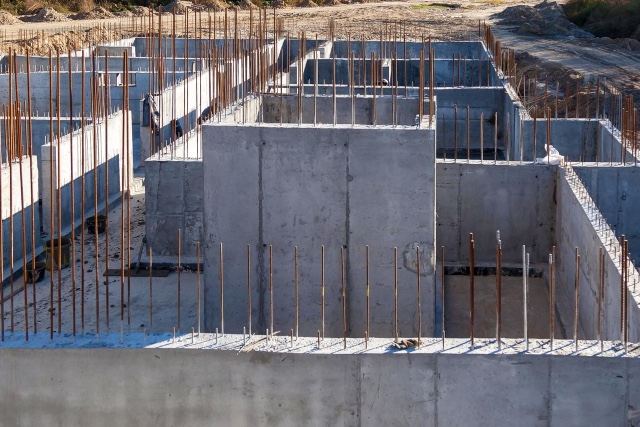
Monolithic concrete walls are used in the construction of private houses, basements, garages, utility rooms, and other permanent structures. Depending on the design, they may serve a load-bearing, enclosing, or other structural function.
Before pouring the concrete, reinforcement and formwork are installed, and the dimensions, vertical alignment, openings, embedded elements, and service penetrations are checked.
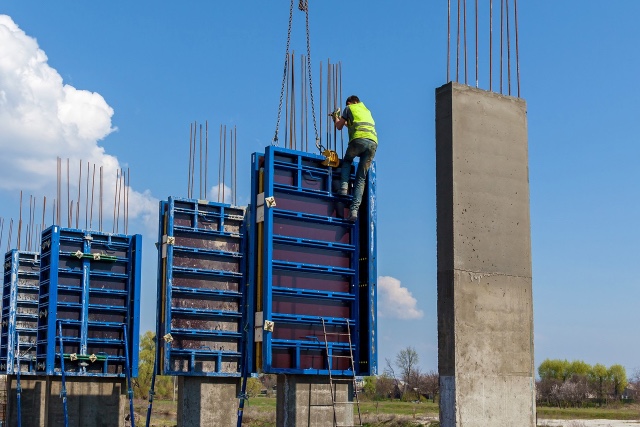
For tall and long walls, the stability of the formwork is particularly important. Fresh concrete exerts considerable pressure, so the fixing and bracing system must maintain the required geometry throughout the pour.
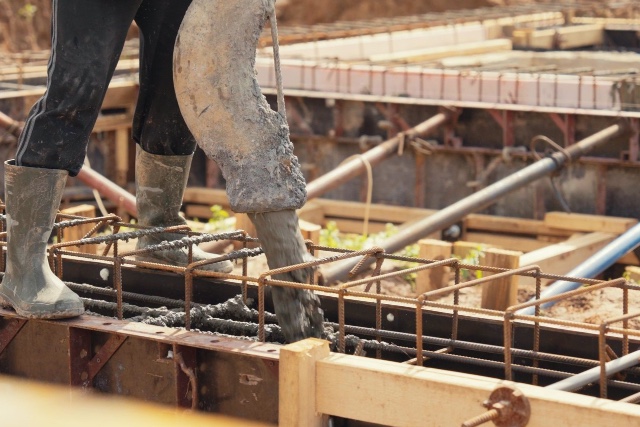
The method of placing and compacting the concrete should also be planned in advance. If the concrete mixer truck cannot reach the work area directly, a concrete pump may be required.
What should be discussed in advance:
the purpose of the wall;
whether it is load-bearing;
the thickness and height of the structure;
the reinforcement layout;
the concrete cover to the reinforcement;
the location of openings and service penetrations;
the type and fixing of the formwork;
the concrete mix specifications;
the method of placing and compacting the concrete;
subsequent curing of the structure.
Concreting columns, beams and floor slabs
Columns, beams, and floor slabs form part of the building's load-bearing system and transfer loads between individual structural elements. It is therefore particularly important to follow the specified dimensions, reinforcement positions, and designed connections.
Before concreting, the reinforcement cages, formwork, temporary props and supports, embedded elements, and required service penetrations are checked. Once the concrete has been poured, most of these elements are no longer accessible for visual inspection.
Continuity of work is also important when concreting floor slabs and large beams. The required volume of concrete should be calculated in advance, deliveries should be organised, and possible construction joints should be determined if the structure cannot be poured in a single operation.
For tall columns, the method of placing the concrete should be planned separately to avoid undesirable segregation and ensure that the concrete fills the space around the reinforcement evenly.
What to pay attention to:
the dimensions and positions of the elements;
reinforcement;
connections between columns, beams, and floor slabs;
concrete cover;
formwork;
temporary props and supports;
service openings;
the method of concrete placement;
possible construction joints;
the timing for removing formwork and temporary supports.
Concreting foundations and foundation structures
The foundation receives loads from the building and transfers them to the ground. Mistakes at this stage may later result in cracking, uneven deformation, and problems with other parts of the building.
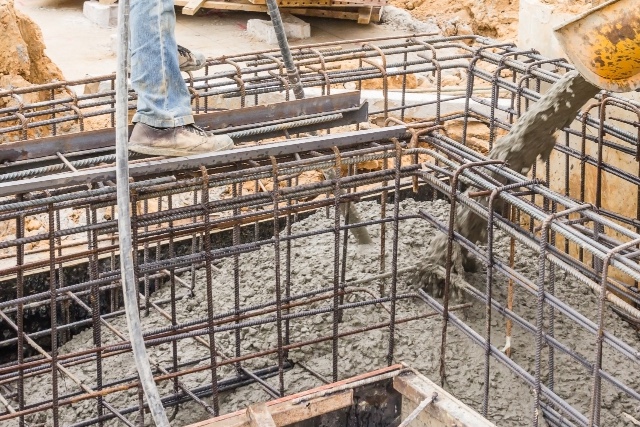
Before pouring, the prepared base, dimensions and levels of the structure, reinforcement, formwork, reinforcement starter bars, and service penetrations are checked.
Site conditions in Spain can vary considerably. A property may be located in a densely built-up urban area, on a slope, on rocky ground, or on a site with substantial changes in level. Foundation parameters should therefore be determined according to the specific design and site conditions.
Access for construction equipment also needs to be planned in advance. On small or difficult sites, a concrete mixer truck may not be able to reach the foundation directly, in which case a concrete pump may be required.
What should be taken into account:
soil characteristics;
site topography;
the foundation design;
the depth and dimensions of the structure;
reinforcement;
starter bars for future walls and columns;
water, drainage, and other service penetrations;
waterproofing solutions;
the volume of concrete;
access for the concrete mixer truck and concrete pump.
Concreting retaining walls
Retaining walls are particularly relevant on sloping sites and properties with changes in level, which are common in many parts of Spain. These structures retain soil and must safely withstand the pressure it exerts.
When constructing a retaining wall, it is important to consider more than just the concrete and reinforcement. The foundation, the height of retained soil, soil characteristics, and possible loads from terraces, paths, vehicles, or structures located above the wall are also important.
Drainage is another key consideration. Water accumulating behind the wall increases pressure on the structure, so drainage is normally treated as part of the overall technical solution.
Waterproofing, drainage, and the location of water outlets should preferably be planned before concreting, while all the necessary elements can still be properly incorporated.
What to pay attention to:
the height of the wall;
the change in ground level;
soil characteristics;
the foundation structure;
reinforcement;
concrete cover;
drainage;
waterproofing;
water discharge;
additional loads above the wall.
Concreting swimming pools and other structures
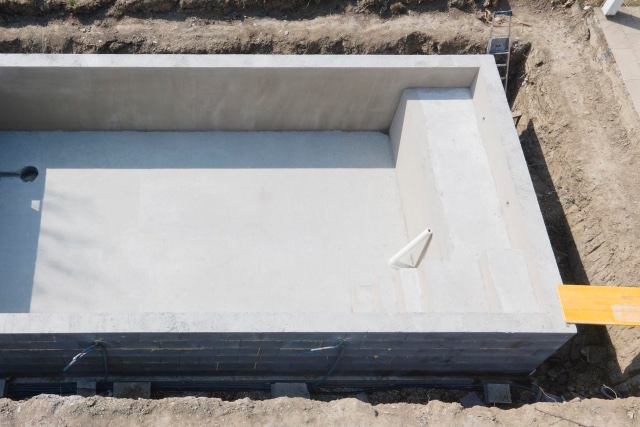
Reinforced concrete is widely used in Spain for the construction of private swimming pools, tanks, utility rooms, outdoor staircases, and other monolithic structures.
When concreting a swimming pool, it is particularly important to determine the locations of pipes, jets, skimmers, drains, lights, and other embedded elements in advance. Once the concrete shell has been completed, relocating these elements may require cutting or drilling into the finished structure.
The sequence for concreting the base and walls, the location of construction joints, and subsequent waterproofing also need to be planned. The concrete structure must be compatible with the later finishing stages.
For other outdoor elements, operating conditions should also be taken into account, including exposure to sunlight, moisture, rainwater, and, in coastal areas, a more aggressive environment.
What should be agreed in advance:
the dimensions and geometry of the structure;
reinforcement;
the concreting sequence;
the location of embedded elements;
service penetrations;
construction joints;
surface requirements;
waterproofing;
the future finish;
outdoor exposure conditions.
Concreting in difficult conditions and hot weather
In many regions of Spain, high temperatures are an important factor when organising concrete work. Direct sunlight, heat, and dry winds can accelerate moisture loss from fresh concrete.
For this reason, by the time the concrete mixer truck arrives, the formwork, reinforcement, equipment, and crew should be fully prepared. Long delays on site are particularly undesirable in hot weather.
Difficulties may also arise because of the location of the property. In urbanizaciones, on narrow streets, on slopes, or in densely built-up areas, access, space for the concrete mixer truck, and the possibility of positioning a concrete pump should all be checked in advance.
If construction equipment needs to occupy part of a common area or access to the site is subject to internal rules, the applicable requirements of the urbanización or comunidad should also be checked beforehand.
What should be planned in advance:
the weather forecast;
the timing of the concrete pour;
the concrete delivery schedule;
crew readiness;
space for the concrete mixer truck;
whether a concrete pump is required;
the required pumping distance;
access restrictions;
protection of fresh concrete against rapid drying;
subsequent curing of the structure.
Turnkey concreting of walls and structures
A comprehensive service may include base preparation, reinforcement, formwork installation, installation of embedded elements, organisation of concrete delivery, concrete pumping, pouring, vibration and compaction, curing, and subsequent formwork removal.
This format is convenient when building a house, extension, garage, or another structure where the concrete elements are interconnected and constructed in sequence.
For comprehensive projects, it is especially important to define responsibilities in advance. It should be clear who supplies the reinforcement and formwork, who orders the concrete, who arranges the pump, and who is responsible for coordinating with the designer or technical specialist.
For projects in comunidades de propietarios and urbanizaciones, it is also advisable to check access conditions for construction vehicles, permitted working hours, use of common areas, and construction waste disposal rules in advance.
What should be clear before work begins:
which structures are included in the scope of work;
who carries out the reinforcement work;
who is responsible for the formwork;
who supplies the materials;
whether the concrete is included;
whether delivery is included;
whether a concrete pump is required and included in the quotation;
who is responsible for embedded elements;
whether concrete curing is included;
whether formwork removal is included;
the completion schedule;
the inspection and acceptance procedure;
how additional work will be charged.
How to choose a specialist for concreting walls and structures
Concreting a wall or another structure may appear relatively straightforward only until the work actually begins. In practice, the quality of the result depends on a whole range of factors — base preparation, reinforcement, formwork, concrete mix specifications, organisation of the pour, compaction, and subsequent curing.
Experience specifically with monolithic concrete structures It is useful to look at examples of similar projects. If you need a retaining wall, floor slab, or swimming pool, it is preferable to choose a contractor with experience in this type of work rather than someone who has mainly poured small concrete areas and screeds.
Checking the design and site before calculating the cost A good specialist first determines exactly what is to be concreted, what loads the structure will carry, and the conditions at the site. Access for equipment, wall height, reinforcement density, and the complexity of the formwork can all have a significant impact on both the construction method and the cost.
Ability to work with technical documentation For load-bearing elements, it is important to follow the dimensions, reinforcement, and connections specified in the design. If site conditions require a change to the structural solution, significant modifications should preferably be agreed with the responsible technical specialist before concreting.
Proper reinforcement It is not only the amount of reinforcement that matters, but also its position, fixing, connections, and concrete cover. Before pouring, it is worth checking that the reinforcement cage will not move during concrete placement and vibration.
Reliable formwork The formwork must withstand the pressure of fresh concrete while maintaining the required geometry. Fixings and supports require particular attention when concreting tall walls, columns, and other substantial structural elements.
Organisation of concrete delivery and placement For a large pour, the required volume of concrete, the delivery schedule for concrete mixer trucks, and the method of placement should be determined in advance. If a concrete pump is required, its position and the necessary pumping distance should be checked before the equipment is ordered.
Correct compaction After placement, the concrete needs to be distributed and compacted, particularly in areas with dense reinforcement. Insufficient compaction can lead to voids and honeycombing, while incorrect use of a concrete vibrator can cause other defects in the mix.
Experience working in hot weather This is particularly important in Spain. During summer, the contractor should plan concrete delivery, placement speed, and subsequent curing in advance. If the structure is exposed to direct sunlight, protection against rapid drying should preferably be planned before the pour begins.
Understanding outdoor exposure conditions For swimming pools, retaining walls, and other outdoor structures, water, humidity, sunlight, and environmental conditions must be taken into account. In coastal areas, the durability of reinforced concrete requires additional attention because of the exposure conditions.
Working in accordance with requirements in Spain For structural concrete, the specific project, applicable technical documentation, and the requirements of the Código Estructural need to be taken into account. For new construction or major renovation, it is advisable to determine in advance whether design documentation, permits, and technical supervision are required. If the work affects common elements of an apartment building, relevant approval from the comunidad de propietarios may also be necessary.
Transparent quotation The quotation should ideally show more than just the total price. It should be clear whether reinforcement work, formwork, concrete, delivery, pumping, equipment, labour, concrete curing, and formwork removal are included.
Warranty and written agreements The dimensions of the structure, scope of work, materials, construction method, schedule, and price are best agreed in writing in advance. For critical structures, it is also important to establish who is responsible for compliance with the design and for coordinating with the architect, arquitecto técnico, engineer, or other technical specialist.
Frequently asked questions (FAQ)
▸ How is a concrete wall usually poured?
The base, dimensions, and design levels are checked first, followed by the installation of reinforcement, embedded elements, and formwork. Once the structure has been inspected, the concrete is delivered, placed, and compacted.
Before work begins, it is advisable to agree on the entire process: the volume of concrete, the placement method, the expected duration of the pour, and subsequent curing of the structure.
▸ Does a concrete wall need reinforcement?
It depends on the purpose of the structure. For a load-bearing reinforced concrete wall, reinforcement is part of the structural solution and is determined according to the dimensions and loads.
If reinforcement is specified in the design, not only the diameter and number of bars matter, but also their position, connections, fixing, and concrete cover.
▸ Can the reinforcement be changed directly on site?
Minor adjustments to the position of individual elements may sometimes be necessary because of actual installation conditions, but changing the structural reinforcement layout of a load-bearing element without approval is not advisable.
If actual site conditions do not match the design, the solution should preferably be agreed with the responsible technical specialist before pouring, while the reinforcement is still accessible.
▸ How do you determine what type of concrete is required for a structure?
There is no single option suitable for all walls, foundations, and floor slabs. The specifications of the mix depend on the purpose of the element, exposure conditions, and design requirements.
For structural concrete, the required parameters are normally defined in the technical documentation. Before ordering, it is worth checking the mix specifications and making sure the intended placement method has also been taken into account.
▸ Can a wall or another structure be concreted in several stages?
In some cases, yes. However, the point where the pour stops becomes a construction joint and should be planned according to the structure.
The concreting sequence is therefore best determined in advance rather than decided during the work because the concrete has run out or the next delivery has been delayed.
▸ Is a concrete pump necessary?
Not always. If the concrete mixer truck can safely reach the pouring area and there is a suitable method of placing the concrete, a pump may not be necessary.
On sites with difficult access, significant changes in level, or structures located far from the road, a pump can make the work considerably easier. The need for one should preferably be determined before ordering the concrete.
▸ What should be done if the property is in an urbanización with restricted access?
The width of the entrance, turning radius, access for heavy vehicles, and available space for positioning the pump should be checked first.
It is also advisable to consider the rules of the particular urbanización or comunidad where applicable. There may be restrictions on working hours, construction vehicle access, or the use of common areas.
▸ Can concrete be poured during very hot summer weather?
Yes, but hot weather requires more careful organisation. High temperatures, direct sunlight, and wind accelerate moisture loss from fresh concrete.
Before work begins, it is worth agreeing on the delivery time, placement rate, and subsequent curing method. This is particularly important for exposed outdoor structures.
▸ Why does concrete need curing after it has been poured?
Fresh concrete needs suitable conditions to harden properly. If the surface dries too quickly, this can contribute to early cracking.
In Spain's hot climate, it is advisable to determine in advance how the structure will be protected and who will be responsible for curing during the first few days after the pour.
▸ When can the formwork be removed?
There is no universal timeframe. It depends on the type of structure, the concrete properties, temperature, and the function of the formwork or temporary supports.
For example, removing side formwork from a wall and removing supports from beneath a floor slab are different situations. The appropriate timing should be determined for the specific structure.
▸ When does concrete reach the required strength?
Concrete gains strength gradually, and the rate depends on the mix and curing conditions.
For this reason, being able to remove part of the formwork does not necessarily mean that the element can immediately be subjected to its full load. The sequence of subsequent work should preferably be established in advance.
▸ Why does honeycombing appear after the formwork is removed?
Possible causes include incomplete filling of the formwork, dense reinforcement, leakage of cement paste through formwork joints, or inadequate compaction.
A small surface defect and deep honeycombing close to the reinforcement require different approaches. For significant defects, the repair method should be chosen after assessing their depth and location.
▸ Are cracks in concrete after pouring dangerous?
Not every crack indicates a serious structural problem. Some surface cracks may be associated with shrinkage or excessively rapid drying.
However, the width, depth, direction, and location of the crack all matter. In a load-bearing structure, it is better to identify the cause first and only then decide on the appropriate repair method.
▸ Should openings for utilities be planned before concreting?
Yes, if the locations of the services are known. Sleeves, penetrations, and embedded elements are much easier to install before the concrete is poured.
Creating a large opening later may require diamond drilling and could affect the reinforcement, so such changes require particular care in load-bearing elements.
▸ How is a new concrete structure connected to an existing one?
The method depends on whether the old and new elements are intended to work together structurally. Anchors, reinforcement starter bars, or other connections specified by the technical solution may be used.
During renovation work, it is preferable to determine this connection before work begins. Simply placing fresh concrete against an existing structure does not always ensure that the two elements will work together correctly.
▸ Is a design required for a concrete wall?
The requirements differ between a small non-load-bearing structure and a wall that forms part of the building's load-bearing system.
If the element affects the stability of the building, the foundation, or existing load-bearing structures, the need for design documentation and technical supervision should be determined before work begins.
▸ Is a design required for a retaining wall?
This depends on the height of the wall, the change in ground level, soil characteristics, and loads. A small decorative wall and a high retaining wall perform very different functions.
For a substantial retaining wall, soil pressure, water, the foundation, and possible loads above the wall all need to be considered, so the structural solution should preferably be determined before excavation and concrete work begin.
▸ Why does a retaining wall need drainage?
Water accumulating behind the wall creates additional pressure on the structure.
For this reason, drainage, waterproofing, and water discharge are usually considered together with the wall structure. It is much easier to plan these elements before concreting than to correct the problem after the landscaping has been completed.
▸ How can the quality of the work be checked before the concrete is poured?
Before the concrete arrives, the dimensions and geometry of the formwork, fixings, reinforcement, concrete cover, embedded elements, openings, and cleanliness inside the formwork are checked.
This is an important inspection stage because, once the concrete has been poured, most of the reinforcement and connections will be hidden inside the structure.
▸ What determines the cost of concreting walls and structures?
The price depends on the volume and complexity of the structure, the amount of reinforcement, the type and height of the formwork, concrete specifications, site access, whether a concrete pump is required, and the pumping distance. Additional costs may arise from equipment hire, difficult logistics, and preparatory work.
Before work begins, it is advisable to obtain a clear quotation and check whether reinforcement work, formwork, concrete, delivery, pumping where required, labour, equipment, concrete curing, and formwork removal are included. This makes it possible to compare contractors based on the actual scope of work rather than just the final price.
Platform capabilities
Expert
I can provide repair and construction services in Spain
 Request your free quote