A boiler is not just a household appliance — it is the heart of the heating and hot water system in your home. It determines whether your apartment is warm in winter, whether hot water is stable, and how safely everything operates. As long as the boiler works properly, most people hardly think about it. But as soon as error messages appear on the display, temperatures fluctuate, strange noises occur, there is a smell of gas, or hot water becomes unstable, comfort quickly turns into a safety concern.
Boiler installation in Spain is needed not only when old equipment breaks down. This service is often requested when buying a new home, during renovations, when switching to a more energy-efficient model, replacing an electric water heater with a gas boiler, or upgrading the entire heating system. Spanish homes can have very different setups — from modern condensing boilers to outdated systems installed many years ago — and a “simple replacement” almost always comes with specific nuances.
Our service helps you quickly find a trusted specialist near you: no random contractors, a clear process, and a neat, reliable result.
Installing a boiler is more than “mounting it on the wall”
Professional boiler installation includes assessing the room, selecting the right type of equipment, correctly connecting gas, water, flue and electrical systems, and performing mandatory safety checks. In Spain this is especially important due to strict regulations and differences between buildings: in some homes everything is ready for a modern boiler, while others require adaptation of connections or improvements to ventilation.
Types of boilers and what to consider when choosing
Gas boiler
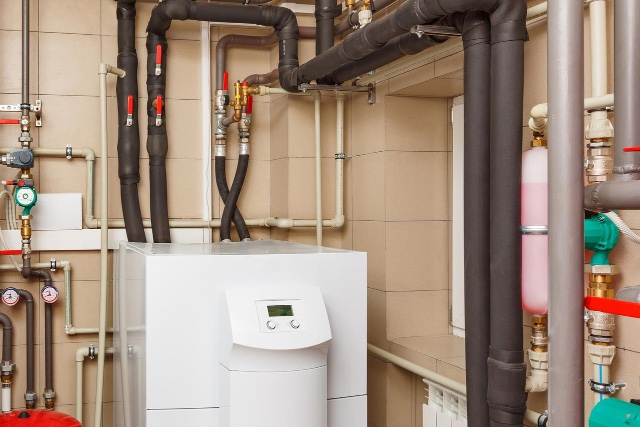
The most common option in Spain. Efficient, suitable for both heating and hot water, but requires proper gas and flue connections.
▶︎ The result is stable heating and everyday comfort.
Questions worth discussing:
Is the existing gas connection suitable for this model?
Is a condensing boiler necessary, or will a standard one be enough?
Does the ventilation meet current requirements?
Electric boiler
Used where there is no gas supply. Easier to install but more expensive to run.
▶︎ A solution without gas or a flue, with minimal construction work.
Questions worth discussing:
Can the electrical system handle the load?
Is a dedicated circuit or breaker required?
How cost-effective will this be with current tariffs?
Condensing boiler
A modern, energy-efficient option increasingly chosen to replace older models.
▶︎ Lower gas consumption and more stable system performance.
Questions worth discussing:
Can it be installed in place of the old boiler?
Is a condensate drain required?
Does the heating system need adjustments or upgrades?
Hot water-only boiler (DHW / ACS)
Used when heating is centralized or not required.
▶︎ A compact solution for reliable hot water.
Questions worth discussing:
Is the power sufficient for all water outlets?
Is system pressure suitable?
Where is the best place to install it?
From inspection to final result: how boiler installation works
The process starts long before the boiler is switched on. Proper preparation is what determines safe and trouble-free operation.
On-site assessment. The specialist checks the room, existing connections, ventilation, flue and overall condition of the systems. This makes it clear whether the selected model can be installed without modifications.
Selecting and agreeing on the solution. If there are any limitations, the technician explains the options — changing the model, adapting connections, or adjusting the system. No last-minute surprises.
Safe removal of old equipment. The old boiler is dismantled in accordance with regulations — especially important when working with gas and water.
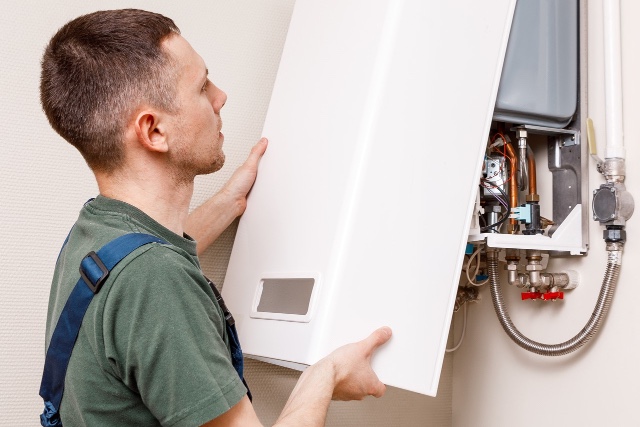
Installation of the new boiler. Mounting on the wall or base, connection to water, heating, gas and electricity, all in compliance with technical requirements.
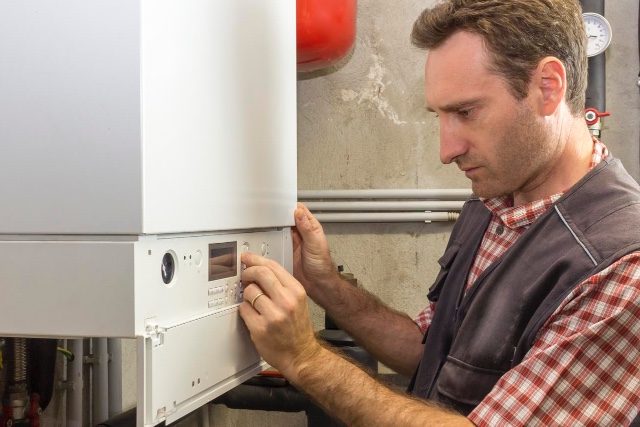
Setup and commissioning. The boiler is started, tested under load, and temperature, pressure and operating modes are adjusted.
Safety checks. Inspection for leaks, correct flue operation, and proper functioning of automation and safety systems.
Final result. You receive a fully operational boiler and confidence that the system will work safely and reliably.
Why installing a boiler yourself is not a good idea
Even if it seems “not that complicated,” the risks are usually in the details:
gas connection errors can be life-threatening;
improper ventilation leads to malfunctions and fines;
non-compliance with regulations can cause issues during inspections or property sales;
without proper setup, a boiler works less efficiently and wears out faster.
Through our service, you find a specialist who installs the boiler properly — not “good enough,” but according to regulations, with long-term safety and reliability in mind.
Frequently asked questions (FAQ)
▸Do I need any kind of permit to install a boiler?
In most cases, yes — especially for gas boilers. The process is usually straightforward, but the installation must be officially registered and correctly commissioned. This is when it becomes clear which documents are required and who handles them.
▸Can I just remove the old boiler and put a new one in its place?
Sometimes yes, but more often the new model has different requirements. Even with similar dimensions, connections, flue or ventilation may differ, and this needs to be considered in advance.
▸How long does the installation take?
Usually everything is completed within one day. A standard setup takes a few hours, while older systems may require additional time.
▸Does the old boiler need to be removed beforehand?
Usually no. In most cases, removal is included in the same job without a separate visit.
▸Where is the best place to install a boiler in an apartment?
Most often on the kitchen or in a technical area, but not every familiar location is actually suitable. Sometimes moving the boiler slightly makes the system safer and easier to maintain.
▸Can a boiler be installed in the bathroom?
In most apartments, no. Such installations are rare and only possible under strict conditions, so alternative locations are usually considered.
▸Will a new boiler work with old radiators?
In most cases, yes — radiators do not need to be replaced. However, if the system has not been serviced for a long time, adjustments or cleaning may be required.
▸Does the flue always need to be replaced?
Not always, but with modern boilers it is quite common. An old flue may not meet current requirements.
▸What are the real benefits of a condensing boiler?
Usually lower gas consumption and smoother system operation. However, actual savings depend on the home and heating system, not just the boiler itself.
▸Can I buy the boiler myself and then call a technician?
Yes, many people do this. The key point is that the model must be suitable and properly commissioned — this affects both safety and warranty.
▸Does anything need to be changed in the electrical system?
In most cases, no. However, some boilers require a dedicated connection, which is better planned in advance.
▸Why is the first startup so important?
Because this is when the boiler is adjusted to the real system and tested in operation. Without this, it may work, but not as reliably as it should.
▸Is it normal if the boiler is noisy after installation?
Often yes, especially at the beginning. This is usually related to air in the system or settings and can be resolved without major work.
▸Does a new boiler need servicing if it’s under warranty?
Yes. Servicing is preventive, not about repairs. Without it, the boiler wears out faster and the warranty may be affected.
▸Can an electric water heater be replaced with a gas boiler?
In most cases, yes — if gas is available. This replacement requires more preparation but is often more cost-effective to run.
▸What should I do if error messages appear after installation?
Most often this is related to settings or sensors. Such signals should not be ignored and are best checked early while the system is new.
▸Are boilers installed in winter?
Yes, installation is possible all year round. In winter, technicians usually try to minimize the time the home is left without heating.
▸Is approval from the building management required?
Sometimes yes, especially in apartment buildings. This depends on the boiler type and building rules.
▸What matters more when choosing a boiler — brand or power?
In practice, correct power selection is crucial. Even a well-known brand will not perform properly if the boiler does not match the size and system of the home.
▸When is it better not to delay boiler replacement?
If the boiler works unstably, shuts down frequently, or there are smells and error messages, postponing replacement usually increases risks and future costs.
Platform capabilities
Expert
I can provide repair and construction services in Spain
 Request your free quote