A washing machine is one of the most essential household appliances in any home. Proper installation affects not only washing performance but also the safety of your property — preventing leaks, short circuits, and potential issues with neighbors.
In Spain, appliance installation requirements are especially important in apartment buildings and residential complexes, where even a minor water leak can lead to serious consequences.
Installing a washing machine is not just about “plugging it in.” It involves correct connection to the water supply, drainage system, and electrical network, precise leveling, and load testing.
Our service helps you find a trusted specialist near you — whether you need a new appliance connected, an old one replaced, or a washing machine relocated.
How a washing machine works and why proper installation is critical
A modern washing machine is a complex system where water, electricity, and mechanical components operate simultaneously. Even a small installation mistake can cause vibration, leaks, or damage to expensive internal parts.
1. Connection to cold water.
The washing machine is connected to a dedicated cold-water tap using a flexible hose with a filter. It is important to: - check the condition of the shut-off valve; - ensure sealing washers are properly installed; - tighten connections correctly without overtightening; - eliminate micro-leaks under pressure.
Incorrect installation may lead to slow, unnoticed leaks that become visible only weeks later.
2. Drainage connection.
The drain hose must be installed at the correct height and securely fixed. Critical factors: - proper connection height (usually 60–90 cm); - no kinks in the hose; - prevention of backflow; - airtight connection to the siphon or drain pipe.
If the drain is installed too low, water may flow out on its own, causing the machine to continuously refill.
3. Electrical connection.
A washing machine is a high-power electrical appliance. It is important to ensure: - a grounded outlet; - no extension cords; - proper load capacity of the circuit; - a functioning circuit breaker.
Connecting to an old or overloaded circuit increases the risk of overheating and power outages.
4. Removal of transport bolts.
Before first use, the transport bolts securing the drum must be removed. If they are not removed: - excessive vibration occurs; - shock absorbers may be damaged; - the drum tank may break.
This is one of the most common mistakes during DIY installation.
5. Precise leveling.
The machine must be installed perfectly level using adjustable feet. Improper leveling leads to: - noise and “jumping” during spin cycles; - faster bearing wear; - floor damage.
Even a few millimeters of misalignment can affect stability.
6. Initial test run.
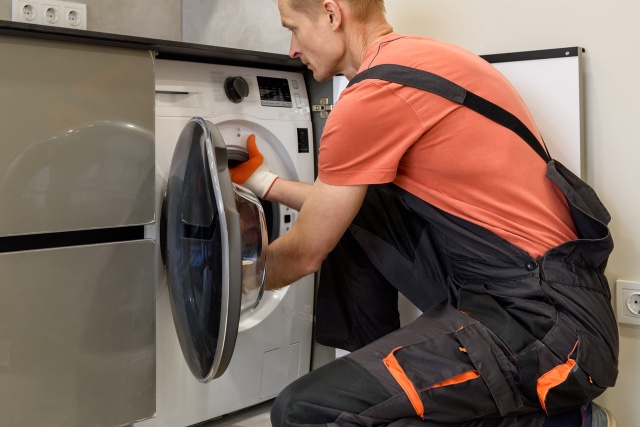
After installation, a test cycle is performed without laundry. The technician checks: - water intake; - correct drainage; - absence of leaks; - stability during spinning; - proper operation of the control panel.
Only after a full inspection is the installation considered complete.
What is included in professional washing machine installation
Installing an appliance involves a set of tasks aimed at ensuring safe and long-term operation.
Site inspection. The specialist checks access to water, drainage, and electricity, as well as the condition of valves and siphons.
Removal of old appliance (if required). Careful disconnection and removal without damaging floors or furniture.
Proper water connection. Use of new washers, secure sealing, and pressure testing.
Professional drain installation. Correct height positioning, secure hose fixing, and backflow protection.
Electrical safety check. Verification of grounding and circuit load capacity.
Removal of transport bolts. A mandatory step to protect internal components.
Accurate leveling. Adjustment of feet for stable positioning.
Full test cycle Running a program to check all functions.
Leak control. Final inspection of connections after pressurization.
As a result, the client receives a fully connected and ready-to-use appliance with no risk of hidden leaks or safety issues.
Additional services
Installing a washing machine under a countertop
Built-in installation requires precision and proper ventilation clearance. The technician checks niche dimensions, carefully positions the appliance, ensures access to connections, and performs a test run.
▶︎ This preserves kitchen aesthetics while ensuring safe operation without overheating or vibration.
What to discuss in advance:
whether there is enough space for connections;
access to the shut-off valve;
whether the appliance will press against walls or furniture;
whether a decorative panel is required.
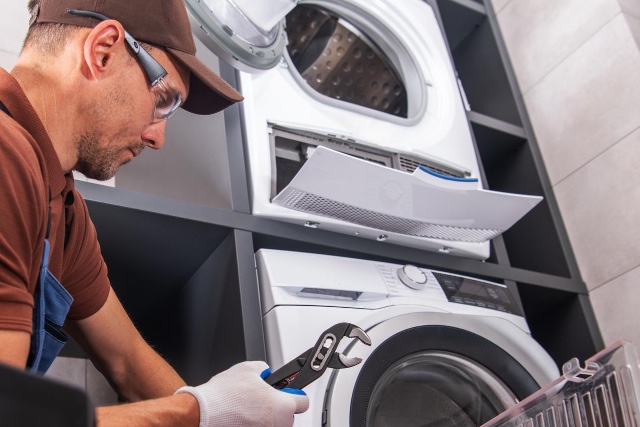
Stacking washer and dryer installation
Vertical installation saves space but requires secure fixation. The technician uses a dedicated stacking kit, levels the appliances, and checks structural stability during spin cycles.
▶︎ The setup remains stable without shifting or excessive vibration.
What to discuss:
model compatibility;
need for an original stacking kit;
floor load capacity;
ceiling height clearance.
Replacement of hoses and water valves
Over time, inlet hoses lose elasticity, and shut-off valves may begin to leak or fail to close properly. These components are a common cause of sudden flooding. The technician evaluates all connections, replaces old valves if necessary, installs reinforced hoses with reliable seals, and tests the system under pressure.
▶︎ This significantly reduces the risk of emergency leaks and protects floors, furniture, and neighbors below.
What to discuss:
age of existing hoses;
signs of corrosion on the valve;
whether a burst-protection hose is needed;
replacement of sealing elements.
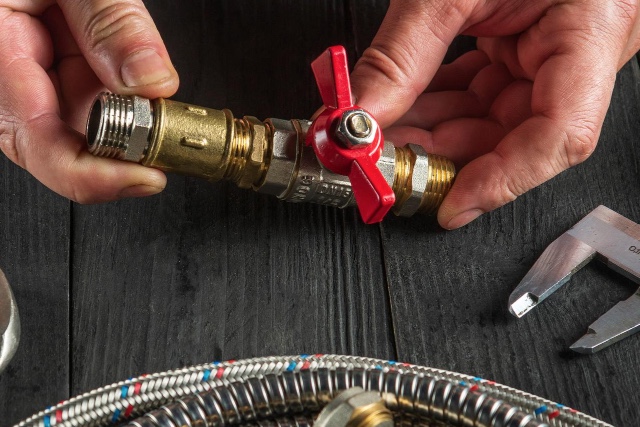
Installation of a dedicated water supply valve
If the washing machine is connected through a shared mixer tap or temporary adapter, reliability is reduced. The best solution is installing a dedicated shut-off valve. The specialist performs a clean connection to the cold-water line, installs a high-quality valve, ensures proper sealing, and tests the system under operating pressure.
▶︎ This allows you to shut off water specifically for the washing machine, increasing safety and convenience.
What to discuss:
access to the cold-water pipe;
pipe material (copper, PEX, polypropylene);
need for adapters or T-connectors;
convenient access to the valve after installation.
Frequently asked questions (FAQ)
▸Can I install the machine myself?
Technically — yes. However, most leaks occur after DIY installations.
▸Should old hoses be replaced?
Recommended. Over time, they lose elasticity and may burst under pressure.
▸Is grounding mandatory?
Yes. It is a basic safety requirement.
▸The machine vibrates heavily — is that normal?
No. It is likely not properly leveled or the transport bolts were not removed.
▸Can it be connected to hot water?
In most models — no. They are designed for cold-water connection only.
▸What if there is no separate water valve?
A technician can install an adapter or an additional valve.
▸Should there be space behind the machine?
Yes. A small gap prevents vibration transfer and hose bending.
▸How long does a properly installed machine last?
On average, 8–12 years with correct installation and maintenance.
▸Can it be installed in the kitchen?
Yes, if water, drainage, and electricity access are available.
▸Why does the machine develop odor?
Usually due to moisture buildup and lack of regular filter cleaning.
▸ Should water be turned off during long absences?
Yes, to reduce the risk of unexpected leaks.
▸Can it be connected using an extension cord?
Not recommended — it increases overheating risk.
▸ The machine gives an electric shock — what should I do?
Disconnect immediately and check grounding.
▸Can a washer and dryer be stacked?
Yes, but a proper stacking kit is required.
▸What most often causes breakdowns?
Improper installation, vibration, hard water, and lack of maintenance.
▸Is limescale protection necessary?
In hard water regions — using protective products is advisable.
▸How long does installation take?
Usually 1–2 hours under standard conditions.
▸ Is the appliance tested after installation?
Yes, a test cycle is always performed.
▸Can it be installed in a new-build property?
Yes, though sometimes water pressure should be checked.
▸Why is professional installation important?
Because a washing machine connects to both water and electricity — two systems where mistakes can be costly.
Platform capabilities
Expert
I can provide repair and construction services in Spain
 Request your free quote