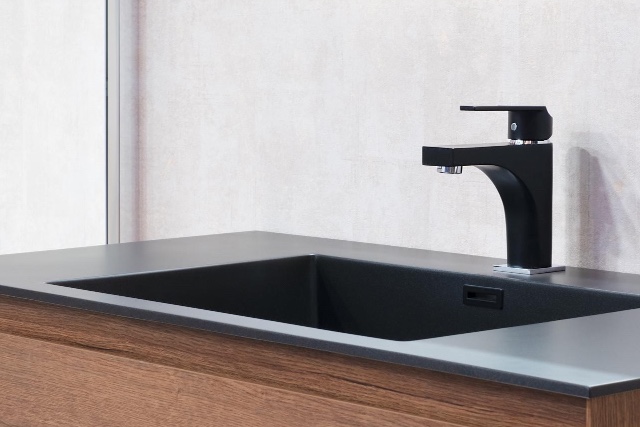
A sink is one of the most frequently used plumbing fixtures in any home. It is used every day — for washing hands, brushing teeth, filling water. As long as it works properly, it usually goes unnoticed. But as soon as leaks appear under the sink, unpleasant odours, slow drainage, cracks in the basin, or the structure starts to wobble, comfort quickly turns into an issue of hygiene, safety, and protecting furniture and finishes.
Sink installation or replacement in Spain is required not only when something breaks. This service is often requested during bathroom or kitchen renovations, after moving house, when updating the interior, replacing old plumbing, installing a vanity unit, or switching to a modern wall-mounted model. In Spanish apartments and houses, you can encounter many different types of siphons, water connections, drain outlets, and wall structures. As a result, “simply replacing a sink” often turns out to involve technical nuances in practice.
Our service helps you quickly find a reliable local plumber — without random contractors, with a clear process and a neat, professional result.
What professional sink installation or replacement includes
Installing a sink is not just about placing the basin and connecting a siphon. A professional service includes inspecting existing plumbing, checking compatibility with the chosen model, correct installation, proper sealing of all joints, and mandatory testing under load. In Spain, this is especially important: one home may have modern plumbing, while another may have outdated pipes, non-standard outlet heights, or hidden connections.
Types of sinks and what to consider when choosing
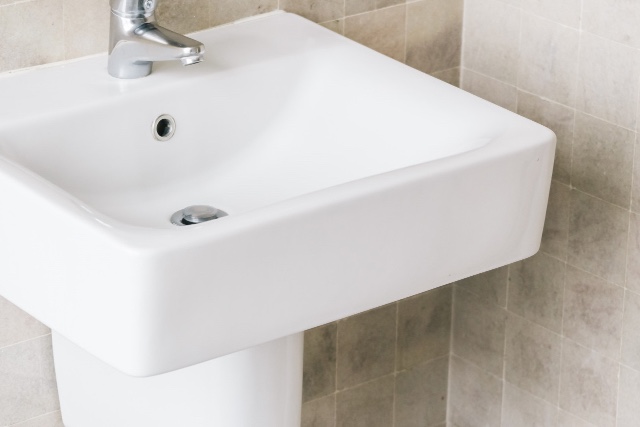
Wall-mounted sink
A classic option that is fixed directly to the wall.
▶︎ The result is a visually light solution that is easy to clean and well suited for small spaces.
What to discuss with the plumber:
Is the wall strong enough to support the sink?
Do the water and drain outlet heights match?
Are additional anchors or reinforcement required?
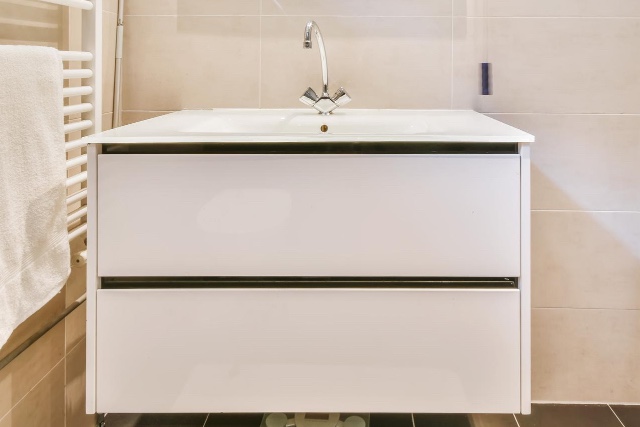
Sink with vanity unit
A popular bathroom solution where the basin is installed on furniture.
▶︎ You gain extra storage space, while the siphon and water connections are hidden from view.
What to discuss with the plumber:
Does the vanity fit the existing plumbing layout?
Will the back panel of the furniture need adjustment?
Can the floor handle the load?
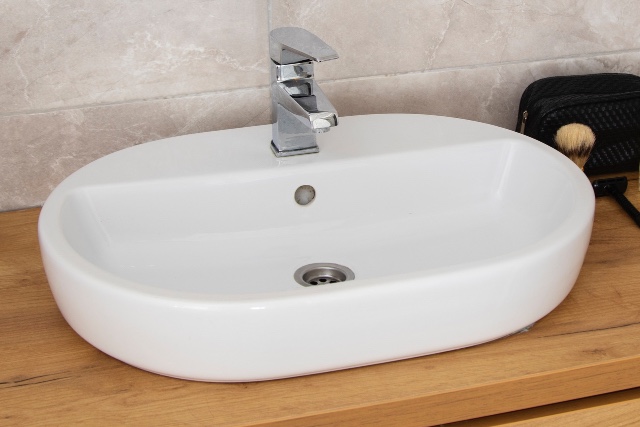
Countertop sink (bowl on worktop)
A modern, designer option.
▶︎ Provides a striking appearance and flexibility in choosing the installation height.
What to discuss with the plumber:
Is the siphon compatible with the selected basin?
Are special holes required in the countertop?
How will edge sealing be ensured?
Built-in sink
Installed into a countertop or furniture.
▶︎ A practical and tidy solution for everyday use.
What to discuss with the plumber:
Does the cut-out exactly match the sink size?
What sealing materials will be used?
Is it possible to remove the sink later without damaging the furniture?
When you should not delay replacing a sink
There are situations where replacing a sink is not about appearance, but about preventing more serious problems. The longer the decision is postponed, the higher the risk of damage to furniture, floors, and walls.
You should replace the sink without delay if:
cracks or chips appear in the basin — even small damage can lead to leaks over time;
the sink wobbles or has lost stability, putting stress on fixings and connections;
moisture or mould regularly appears under the sink;
water drains slowly despite cleaning the siphon;
there is a persistent sewer odour;
old plumbing has lost its tightness and keeps dripping even after replacing seals.
In these cases, fast and professional sink replacement is far cheaper and less stressful than dealing with the consequences of leaks and damaged furniture.
How sink installation or replacement is done: step by step
Even when the task looks simple, an experienced plumber always starts by assessing the conditions. This helps prevent leaks, odours, and issues after the work is completed.
Inspection and diagnosis. The plumber assesses the type of sink and installation method, the condition of the wall or furniture, the location of water and drain outlets, and the state of the siphon and water connections. This stage determines whether a standard replacement is sufficient or if adjustments are needed.
Shutting off the water and removing the old sink. The water supply is turned off, the connections and siphon are disconnected, and the old sink is carefully removed without damaging tiles, furniture, or existing plumbing.
Preparing the installation area. The base is checked for strength and level. If necessary, the plumber levels the installation point, prepares fixings, or adjusts the furniture so the new sink is stable and secure.
Installing the sink. The sink is installed and fixed precisely level — to the wall, vanity unit, or countertop, depending on the model. Joints are sealed neatly if required.
Connecting water and drainage. A suitable siphon is installed, and hot and cold water connections are connected. All joints are assembled with proper seals to prevent leaks and odours.
Testing under load. After installation, the plumber runs the water, checks drainage speed, joint tightness, and sink stability. This allows small issues to be detected and resolved immediately.
Final inspection. The specialist ensures the sink is securely fixed, water drains correctly, and the area remains dry and tidy. The sink is ready for daily use without unpleasant surprises.
Frequently asked questions (FAQ)
▸ Will a new sink fit my existing drainage system?
In most apartments and houses, connection is straightforward. In practice, however, the drain height and siphon design often determine whether adjustments are needed.
▸ Is it necessary to replace the siphon when installing a new sink?
In most cases, yes. Replacing the siphon is the most reliable option, as old siphons are a common cause of odours and minor leaks after installation.
▸ Why can an odour appear after installation even if everything is new?
Usually the issue is not the sink itself, but the siphon assembly or water trap. With correct installation and testing under load, this does not happen.
▸ Can the old water connections be reused?
Sometimes they can, if they are in good condition. In practice, however, old connections are one of the most common sources of future leaks.
▸ Is it acceptable if the sink wobbles slightly?
No. A sink must be completely stable. Even minor movement puts stress on fixings and connections.
▸ Is a small amount of moisture under the sink normal?
No. Any moisture indicates a problem — either sealing issues or condensation caused by improper assembly.
▸ Can a sink be installed higher or lower than the standard height?
In most cases, yes. Height is often adjusted for comfort, as long as water and drainage connections allow it without strain.
▸Will a new sink fit my old vanity unit?
Often yes, if the dimensions match. Differences in drain or tap hole positions may require adjustments.
▸ Does furniture need to be removed when replacing a sink?
Usually not. Replacement is typically done locally, provided the vanity and floor have not been damaged by moisture.
▸ Can a countertop sink be installed without replacing the worktop?
Sometimes yes, if the cut-out and dimensions are suitable. Proper sealing is especially important in this case.
▸ Why might water drain more slowly after installation?
Most often due to the siphon configuration or drain angle. With correct assembly, water drains quickly and quietly.
▸ Can a sink be fixed to a plasterboard wall?
Sometimes, if the wall is reinforced. Without reinforcement, such installation becomes unsafe over time.
▸ Do I need to replace the tap when replacing the sink?
Not necessarily. If the tap is in good condition and compatible, it is often reused.
▸Is it realistic to install a sink yourself?
Sometimes, especially in simple setups. However, most mistakes appear weeks later, not immediately.
▸ What most often causes problems after replacement?
Usually small details: an old siphon, worn water connections, or weak fixing that was overlooked.
▸ Can a sink be replaced without damaging tiles?
In most cases, yes. With careful removal, tiles and finishes remain intact.
▸ When should sink replacement not be postponed?
If there are cracks, persistent odours, constant moisture, or the sink has become unstable — this is no longer about comfort, but about protecting your renovation.
▸ Why can mould appear under the sink?
Typically due to ongoing moisture from micro-leaks or poor ventilation in the cabinet area.
▸ What do clients most often forget to consider when replacing a sink?
Installation height, siphon type, and the condition of water connections — these details often cause inconvenience later.
▸ What should be discussed before work starts to ensure everything goes smoothly?
Sink compatibility with existing plumbing, whether the siphon and connections need replacement, and how the final result will be tested after installation.
Platform capabilities
Expert
I can provide repair and construction services in Spain
 Request your free quote